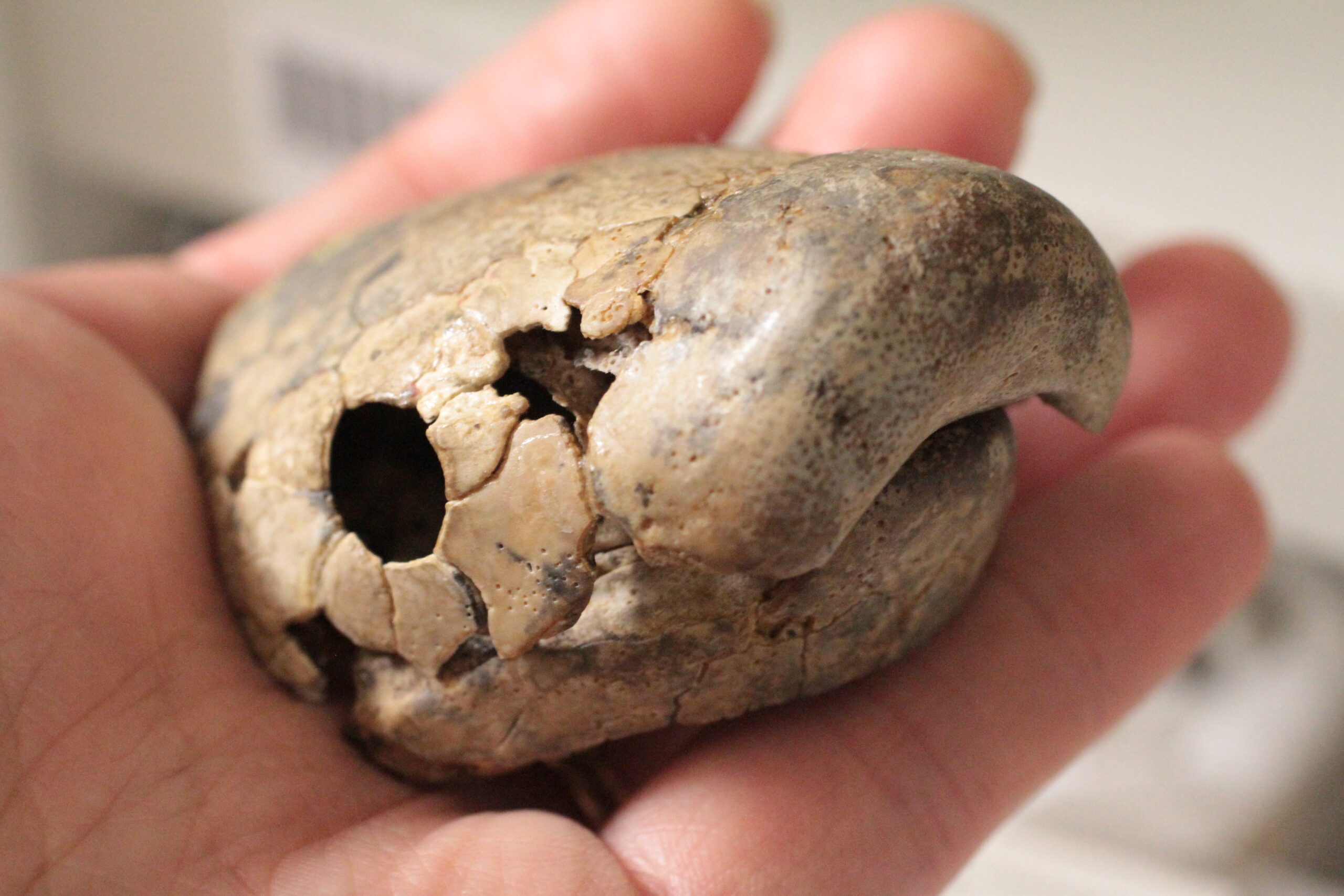
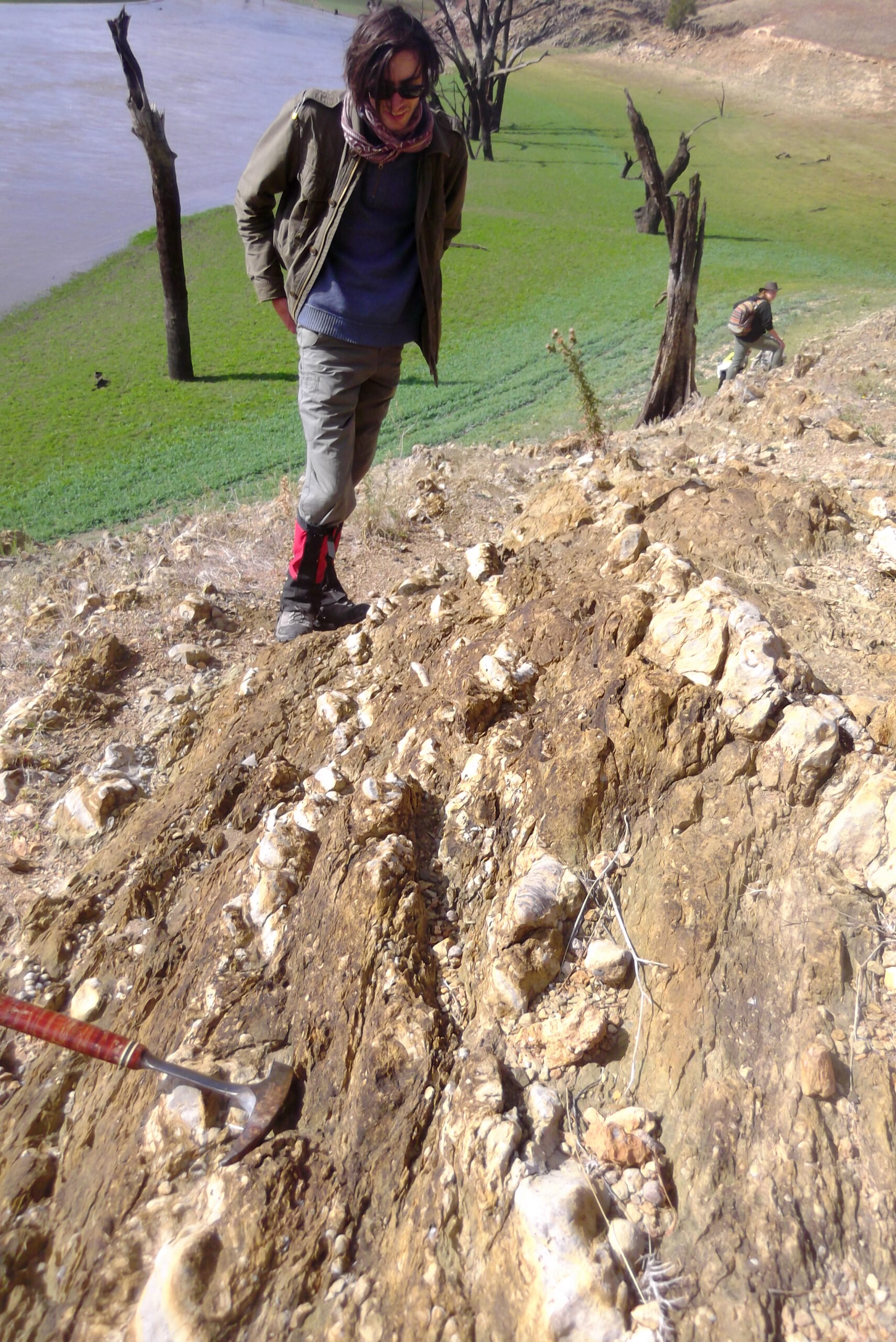
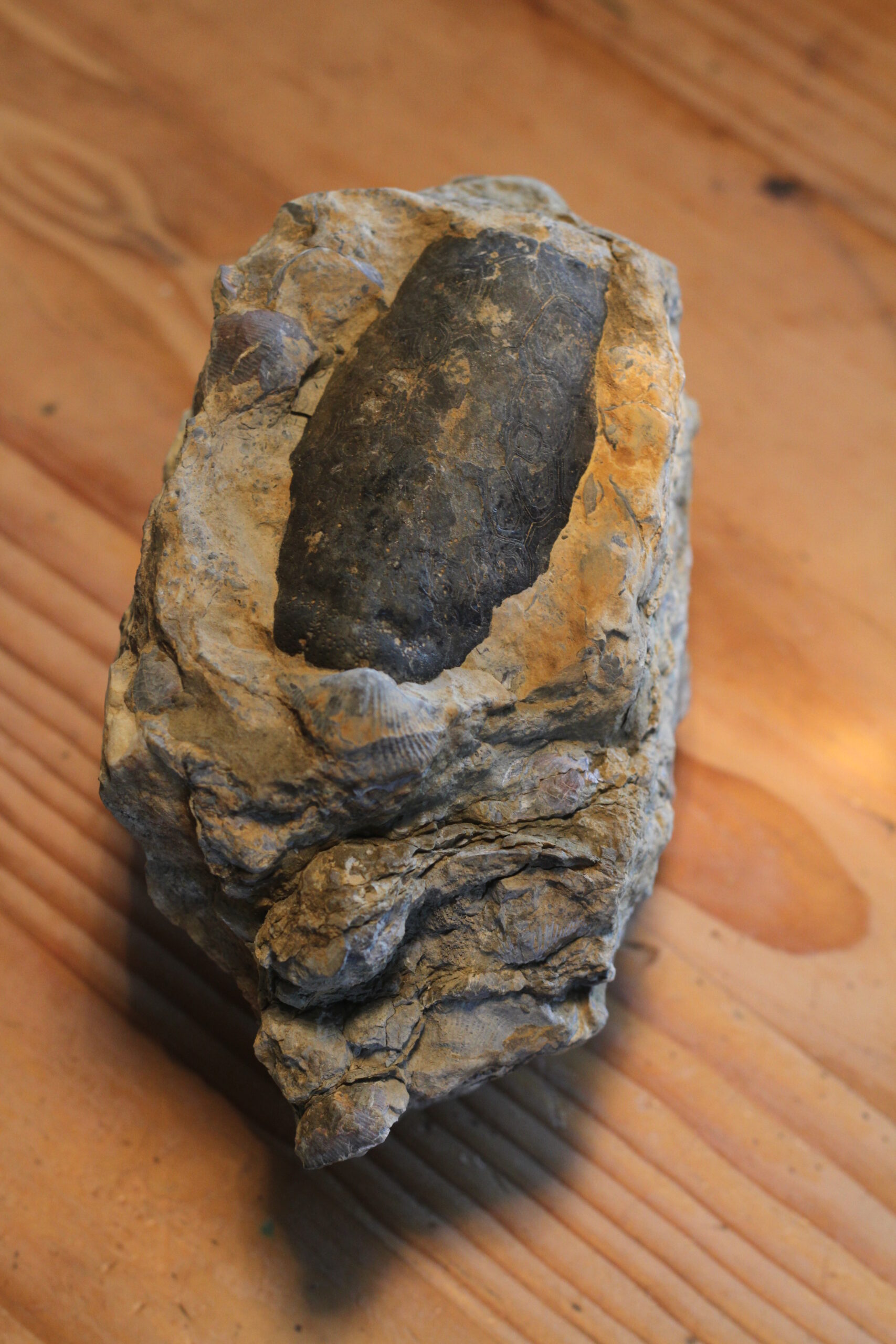
I should tell my fish story, about how i discovered an ancient intact lungfish skull at Burrinjuck. It was 2015 on the Taemas station (which is owned by Rupert Murdoch who owns a lot of farmland in that area), where i was on a geology field trip with ANU measuring all the folds and faults around there. It was the trip where i met Carolina, my future musical companion, and her sister Annie, with whom i walked all around those hills for a week in terribly rainy weather.. the whole place turned to mud and we almost lost control of the 4wd down a steep slope one day. I remember the feeling of it sliding sideways down towards the dam as wheels spun on the slick mud track.. but eventually the sun came up and we had a delightful day at ‘Shark mouth’ sketching the folded limestones which do look like a shark’s mouth. The whole area is an ancient and enormous reef from the Devonian (Emsian) it’s full of corals and crinoids and things like that, very well exposed especially alongside the Burrinjuck dam as the water level was down a bit at the time. We were walking along a mudflat and measuring some folds on the edge of the lake (around about here) when i spotted what looked like a dark rock, crumbling out of the top of a small anticline. I went over and plucked it out and was amazed to see strange hexagonal patterns on it. It was a skull plate of a fish – a lungfish – i could see the tiny nostrils in its nose. Imagine that, the worlds first nostrils, 410 million years ago! There was an alien eeriness to it – the queer intricate patterns of a complex life form, the close cousins of which were to explode soon into all the terrestrial vertebrate species including ourselves. My discovery was very exciting for everyone and i was allowed to keep it as we could keep ‘float’ fossils but i promised to contact the local specialist when we got back to town to find out more about it and make sure it went into a collection.
That specialist was Gavin Young, the local expert on Devonian fish. He had an office off on the edge of campus in a lovely little old 50s building covered in wisteria. He and Bob Dunstone were doing work on edenopteris and a had a huge fossil that they’d dug up from near Eden laid out in an dusty room there. I remember its pale grey bones were so perfectly preserved you could still see all the marrow.. like it had died yesterday.. although it crumbled to the touch. Bob was actually dissolving the bone to make rubbery casts of its impression in the hard red rock it was encased in. It was unfortunately a bit destructive as science sometimes is but more about that later. As i approached I’d hear him thumping away at the rock this funny old room in what had been a mathematics precinct and still had black and white pictures of prominent old mathematics lecturers hanging in frames on the wall. That building got demolished a few years later with all the fancy new physics precinct which i think is a great shame, how the ANU erased so much of itself in the process. Anyway bit of an aside but i loved that aesthetic and Bob is a lovely man. Down the hall there was a huge old 50s toilet with a chain how often do you find those things any more?
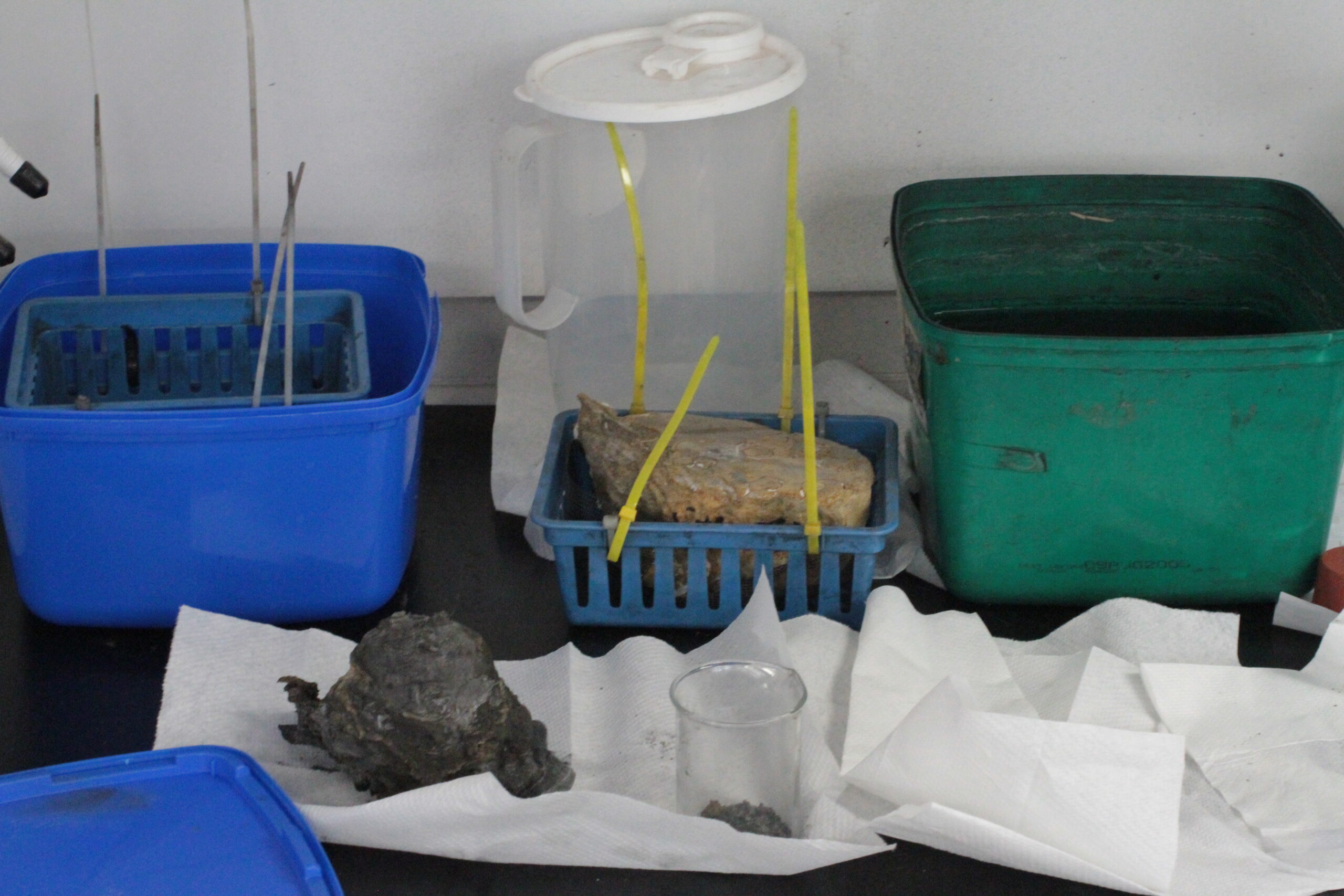
I was gratified to see that Gavin was astounded by the lungfish skull – in fact i’d thought it was a placoderm (nostrils notwithstanding) but he confirmed it was a lungfish (Dipnorhynchus) and i think it turned out I was only the second person to discover an intact skull of one from Burrinjuck since Etheridge about 100 years before. It wasn’t a new species of anything but it was a fine specimen. So i began to work with Gavin, he got me set up in a lab dissolving placoderm bones out of limestone using formic acid. It takes a very long time, repeated short baths of the rock then painting the newly exposed bone with epoxy to preserve it from subsequent dunks into the drink. i spent over a year working on only about 4 or 5 arthrodire placoderm bones painstakingly etching them out. It was fascinating to see them slowly reveal themselves. Only after completely getting them out did you really know what you had. I had to learn all the names of the different bones that make up arthrodire skulls and how they fit together – placoderms were a funny group of fish unlike anything now really, with sometimes their entire body covered with these armoured plates, which have analogues to the bones in our own skulls, except for us they are inside the skin. The bones often had a strange bumpy pattern and were stained black perhaps from irons leached out from the rocks that hosted them. I finished my project, which identified all the bones i’d etched out with the correct fish – it was actually impossible to say for sure where they all came from there’s still a lot that isn’t known about these fish and not all the species are well described – half of the descriptions are actually from Gavin’s papers. I wrote my work up and presented it and got a kind of modest mark from Gavin in the end, i think he wanted me to go deeper and i did too but i was juggling everything with family and work. I have happy memories of those times – the crazy vats of concentrated formic acid which were quite scary to handle, the wonderful ANU store room of hundreds of fish bones laid out in drawers (Gavin later took a bunch of these home which caused a rift with the uni but i tried to stay out of that). I enjoyed seeing what the other scientists were up to, Lynne Bean with her teleost fish from Talbragar, the two Brads with their lake George sediment cores. But most of the time i had the lab to myself and could feel like i was a real scientist, pottering away on my special topic.
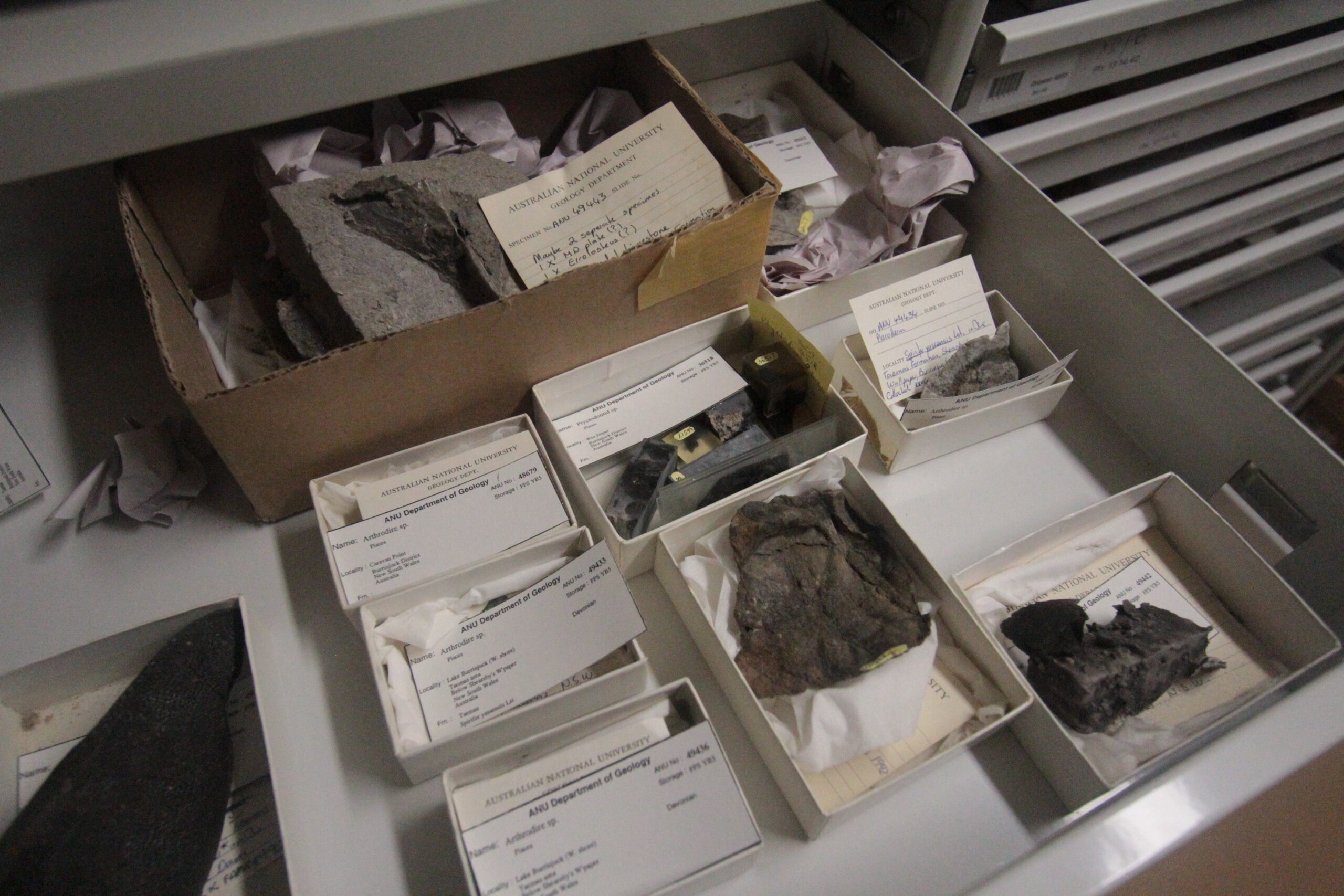
The Lungfish skull i’d found was analysed by another postdoc student who had it cleaned up in China by scraping the rock away – a technique that was supposed to preserve more than the acid does – but i’m not sure it did really. So i felt a bit sad about that. Not that the acid was a perfect method – to get it perfect you had to get the timing just right and a couple of times i left it in a bit long and some of the bone got a tiny bit etched away, losing a bit of the detail. like with Bob’s edenopteris, i regretted that these samples had to get kind of damaged in the process of analysing them. I hope that in the future we can use more non-destructive techniques like CT scans to analyse the bone in the rock without damaging it at all. Fortunately there will still be a lot of bones down there at Taemas, and Eden, hidden away. Its one of the great tantalising frustrations of geology that so much of the story is hidden beneath our feet, it’s there but can’t be got at, except through a few road cuttings and cliffs and clefts.
So that was my fish bone story, i would love to keep working on that. It’s a great frustration to me that there are so many interesting avenues to explore in science but there’s so little interest from the main flow of people so the jobs just aren’t there and the knowledge stays locked up for another century or two, only slowly being etched out by a few enthusiasts like Gavin. I suppose may be all the big discoveries are made now and there are diminishing returns, but there’s still so much we don’t know. Also with Sanskrit, there are thousands of texts that could do with some work. There is so much that’s interesting out there, but human efforts seem mostly pointed to mundane things like the seeking out of pleasures and comforts. Well for some of us following our curiosities is a pleasure. I wonder why it isn’t more celebrated.